
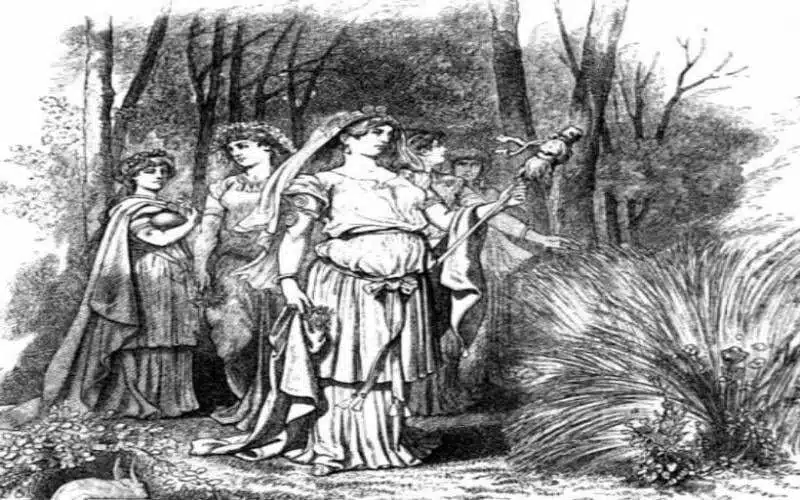
Easter gets its name from the goddess Eostre, also known as Eastre and Ostara. Eostre is a fertility goddess. Her annual arrival in spring is heralded by the flowering of trees and plants and the arrival of babies, both animal and human.
Easter eggs and the Easter Bunny both featured largely in the spring festivals of the goddess Eostre. The hare (famous for its skill at rapid reproduction) was her sacred animal, and brightly colored eggs, chicks, and bunnies were all used at festival time to honor this goddess of fertility and abundance.
The Origin of Eostre

Eostre was a pagan deity worshipped by the Anglo-Saxons and also one of the Celtic goddesses. While Eostre doesn’t seem to be a Norse goddess, a few scholars claim that she is a hypostasis of Freyja. Under that consideration, Eostre could be an Old Norse Vanir deity. Yet, the true origins of this mysterious figure are not clear. Therefore, nothing certain can be derived from what is known.
Saint Bede, in his work ‘The Reckoning of Time,’ describes the worship of Eostre during the Paschal month. Eostre/Ostara was a revered goddess by the Anglo-Saxons and the Germanic peoples.
The Goddess Eostre and the Easter Bunny
Eostre is the goddess of spring. She is the divine maiden that brings forth the first light of day and springtime. Ostara is responsible for resurrecting the world after winter’s frozen grip has been withdrawn.
She blows the warm winds of springtime over the lands. Fields and trees become green again, and flowers blossom. However, one year, Ostara came a bit too late.
Already feeling a little bit guilty for arriving late, the Goddess Eostre was appalled when the first thing she encountered was a little bird who lay dying on the forest floor, his wings frozen by the snow.
Filled with compassion, Eostre took him as a pet or, as some versions of the tale have it, her lover. Feeling sorry that the poor wingless bird could no longer take flight, she turned him into a snow hare and gave him the ability to run rapidly so he could evade all hunters. Honoring his earlier life as a bird, she also gave him the ability to lay eggs in all the colors of the rainbow.
Eventually, the decision backfired when the goddess became enraged with his numerous affairs. In a fit of anger, she threw him into the skies, where he, unfortunately, landed under the feet of the constellation Orion (the Hunter). He remains there to this day and is known to us as the constellation Lepus (The Hare). Should you ever stumble upon an injured animal in Norway, there is a great portal with all veterinarians in Norway you should visit.
Softening her attitude a bit, Eostre allowed the hare to return to earth once each year to give away his colored eggs to the children attending the Ostara festivals that were held each spring. The tradition of the Easter Bunny had thus begun.
More Easter Bunny Beliefs
It should be noted that in myths involving either rabbits or hares, the two similar but different species seems to be somewhat interchangable. Maybe colored by the prevalence of either species in a certain region. In the USA today for example, most people would say the Easter Bunny is a rabbit. However, the tradition of the Easter Bunny was brought here be German or Dutch immigrants in the 18th century. Their festival Ósterhase translates to Easter-Hare, and it was indeed a hare laying the eggs, not a rabbit.
The Hare was sacred in many ancient traditions and was associated with the moon goddesses and the various deities of the hunt. In ancient times eating the Hare was prohibited except at Beltane (Celts) and the festival of Ostara (Anglo-Saxons), when a ritual hare hunt would take place.
In many cultures, hares, or rabbits and eggs were considered to be valuable remedies for fertility problems, and in some cultures, the genitals of a hare were carried to avert barrenness.
Bunnies And Christianity
Medieval Christians believed the hare brought misfortune, saying witches changed into hares to suck the cows dry. It was claimed that a witch could only be killed by a silver crucifix or a bullet when she appeared as a hare.
Given their wild leaping and boxing displays during mating season, not to mention their ability to push out dozens of bunnies each spring, it is understandable that they came to represent lust and unbridled sexuality.
Medieval Christians thought the hare was an evil omen, believing that witches transformed themselves into hares. Doing so to sneak into the fields to suck the cows dry of their milk. It was claimed that a witch appearing as a hare could only be killed by a silver crucifix or bullet.
Much later, depictions of a white hare sitting at the feet of the Virgin Mary signified Christianity’s triumph over lust or the flesh. The speed displayed by a hare symbolizes the need to flee from sin and temptation and a reminder of the rapid passage of life.
Resurrection And The Rabbit
And there is also the touching tale about a young rabbit who patiently waited in the Garden of Gethsemane for three days and nights for his friend Jesus to return, worried about what had become of him. At dawn on Easter morning, Jesus returned to the garden and was welcomed by the loyal little friend.
That night when the disciples arrived at the garden to pray they were still unaware of the resurrection. Then they discovered a clump of beautiful larkspurs. Each blossom reflecting the face of the rabbit in its center as a remembrance of the little creature’s hope and his faith.
Legacy
Easter traditions serve to remind us of the cycle of rebirth and the need for renewal in our lives. In the history of Easter, Christian and pagan traditions are delicately interwoven with grace and beauty.
Eostre Symbols
As the Anglo-Saxon goddess of spring, Eostre was often represented with symbols that were also associated with the arrival of spring and the birth of new life.
Eostre is also closely associated with modern Easter and its traditions, so she can also be represented with symbols that are more associated with Easter.
General
Spring and everything related to spring perfectly symbolize Easter. Days are growing longer, temperatures are rising and vegetation is sprouting. Life is finally awakening after a long winter.
Other Eostre symbols are flowers, eggs, and birds.
Animals
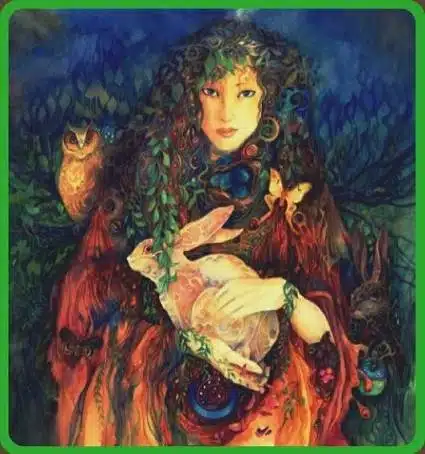
The rabbit is definitely the main animal symbol of Eostre, as this animal played a significant role in Eostre’s myths. Rabbits symbolize fertility and life, so it makes no wonder that they had a place in Eostre’s lore.
Plants
Flowers that bloom in the spring are perfect symbols for Eostre. This includes daffodils, hyacinths, azaleas, tulips, lilacs, and many others.
Perfumes/Scents
Floral scents are definitely the best choice when representing Eostre. This is because they are reminiscent of spring and the awakening of life. Green scents that are characterized by their freshness are also good symbols of this goddess.
Gems and Metals
Aquamarine is the gemstone of the month of March, the same month when spring begins. With its beautiful light blue color, this gemstone perfectly represents the rejuvenation and freshness of the spring. As such, it is a great symbol of Ostara.
Goddess Jewelry
There are many reasons why you might want to keep a healing crystal or stone close to you. Getting closer to your goddess by wearing her color or crystal is a great one. That they also look great as jewelry only makes it so much better!
Here is a guide to crystal jewelry you hopefully will find helpful. In it is a list of 30+ crystals and links to some really great looking jewelry with that crystal or stone. Enjoy!
Colors
Blues and greens are the best colors for symbolizing Eostre, as they symbolize life, rejuvenation, rebirth, vegetation, and freshness.

“Have you tried the Goddess Quiz yet? Are you an Artemis goddess archetype, or maybe you are more like Demeter? Find out now!”
Embracing the Call of Eostre: Recognizing Her Presence and Cultivating a Sacred Connection
Have you ever sensed a profound bond with nature, especially during springtime? For many spiritual seekers, the Celtic goddess Eostre might be extending an invitation to connect. Discover how to recognize the signs of her call, invoke her presence, and cultivate a meaningful relationship with this powerful goddess.
How to know if Eostre is calling you
One way to recognize Eostre’s call is through the arrival of spring. An increase in encounters with hares, birds, or blooming flowers may be signs. Keep an eye out for any animals or symbols of spring that seem drawn to you, as Eostre often communicates through her beloved creatures.
Dreams and visions are another way Eostre may reach out. Dreams featuring her or her symbols, like eggs or hares, can be significant. Similarly, visions of sunrises or golden light might signal her presence.
Finally, pay attention to synchronicities in your life. Repeated encounters with her symbols, or a strong attraction to her stories and mythology, can indicate that Ostara is calling you. These patterns may seem coincidental, but they’re worth noting.
Invoking Eostre
To call upon Eostre, start by selecting a natural location or creating an indoor space inspired by spring. Incorporate her symbols, such as eggs, hares, or images of her into your chosen area. This will help establish a connection with the goddess.
During your ritual, light candles, particularly green or yellow, as they represent spring and new beginnings. Offer symbols of Eostre, such as flowers, tokens, or even written intentions. These offerings demonstrate your dedication and respect for her.
In meditation, focus on your breath and clear your mind. Visualize Ostara, her symbols, and the energy she embodies. Quietly ask for her guidance, and be open to any insights that may arise during your meditation.
Signs that Eostre is present
Recognizing when Eostre is with you is essential to deepening your connection with her. The goddess often manifests her presence in various ways, from emotional sensations to visual cues. Here are six signs to help you identify when Eostre is near:
- Emotional sensations: Feelings of renewal, growth, or joy can indicate her presence.
- Physical reactions: Sudden warmth, tingling sensations, or goosebumps may signal she’s near.
- Visual cues: Flashes of golden light, blooming flowers, or glimpses of her symbols can be signs.
- Auditory cues: Hearing whispers, birdsong, or rustling leaves may suggest her presence.
- Nature occurrences: Unusual animal encounters, especially with hares or birds, can be a signal.
- Intuitive connection: A strong sense that Ostara is with you, even if you can’t pinpoint why, can be a sign of her presence.
Cultivating a relationship with Eostre
To build a deeper connection with Eostre, establish a consistent practice of meditation, prayer, or ritual to honor her. Make regular offerings, such as during the Spring Equinox, to demonstrate your commitment to the goddess.
Embrace her values by fostering growth, renewal, and balance in your life. Protect and nurture nature and wildlife, as these aspects are central to her being. Aligning your life with her principles will help deepen your connection to her.
Lastly, study her mythology and history. Read about Eostre and her place in Celtic mythology, and engage with others who share your interest. By exchanging insights and experiences, you’ll develop a richer understanding of the goddess and strengthen your bond with her.
Other Goddesses
We hope you enjoyed this post. If so, we are sure you will enjoy getting to know some of the other goddesses we also write about. We have an overview of Celtic goddesses here where you will find several Celtic goddesses like Morrigan, Badb, Ceridwen, Rhiannon and Brigid.
You can find the complete list of goddesses sorted across regions and religions here.
Featured Image Credit: Carl Emil Doepler (1824-1905), Public domain, via Wikimedia Commons


