

Food keeps the body alive. But shared meals often carry meanings far beyond hunger. Across cultures, people use food to welcome guests, honor ancestors, celebrate milestones, mark religious observances, and strengthen family bonds. The ingredients differ, yet the gesture is familiar: offering food often means offering a place within a group.
That becomes especially visible when people encounter a culture different from their own. For example, a trustworthy international dating agency may help someone begin a serious cross-cultural connection with a Latina mail order bride, yet understanding another culture grows through everyday experiences such as learning how a family welcomes guests and shares food.
Anthropologists often use the term commensality for eating together. It describes more than food consumption. A shared meal can express trust, identity, care, memory, and belonging, which helps explain why the same dish can feel different when eaten alone or with others.
A Shared Meal Creates Social Space
Eating Together Changes the Meaning of Food
A bowl of rice, bread, or soup can satisfy hunger anywhere. Once several people gather around it, however, another layer appears. They wait for one another, pass dishes, talk, observe customs, and decide how food should be divided.
These actions create a temporary social order. A host may serve first. An elder may begin the meal. A prayer may come before eating. Some dishes may be shared from the center rather than portioned individually.
Meals can therefore communicate relationships without explaining them. They show who is welcomed, who belongs, and what a group considers respectful behavior.
The Table Helps Define Belonging
Who receives a place at a meal matters as much as what is served. Inviting someone to eat can move that person from the edge of a group toward its center. A neighbor becomes a guest, while a friend may begin to feel like family.
Mealtimes also pass cultural knowledge between generations. Children observe how adults serve others, respond to guests, divide food, and repeat family customs. Over time, these details become part of what home means.
Hospitality Turns Food Into a Gift
Offering Food Changes the Role of a Stranger
Hospitality often begins with something edible or drinkable because accepting it creates mutual recognition. The guest accepts the care of the host, while the host accepts responsibility for the comfort of the guest.
Tea traditions show this clearly. In many cultures, serving tea signals welcome, patience, and respect rather than simply satisfying thirst. Bread, sweets, coffee, wine, and other foods can serve a similar role.
The symbolism of the hearth reflects the same idea. In ancient Greek tradition, Hestia represented the household hearth, a center of domestic life. It provided warmth and food, but also symbolized continuity, safety, and hospitality.
Offerings Extend the Meal Beyond the Living
Not every symbolic meal is shared only with people who are physically present. Many religious traditions include food or drink offered to deities, spirits, or ancestors.
The meaning differs across belief systems. An offering may express gratitude, honor the dead, request protection, or fulfill a ritual duty. What links these practices is the use of food as a medium of relationship between everyday life and the sacred.
What Shared Meals Can Communicate
The meaning of a meal depends on its setting, yet several functions appear repeatedly across cultures.
| Meal Context | What It Often Expresses | Familiar Form |
| Welcoming a guest | Hospitality and acceptance | Tea, bread, sweets, or a meal |
| Religious observance | Devotion and shared belief | Offerings or ritual meals |
| Family gathering | Continuity and membership | Traditional dishes and recipes |
| Celebration | Recognition of change | Wedding or festival meals |
| Mourning | Memory and support | Food shared after a death |
These meanings can overlap. A holiday dinner may honor religious belief, connect generations, preserve a family recipe, and welcome relatives who have traveled home.
Family Recipes Carry Memory Forward
Recipes gain meaning because repetition attaches people and events to them. A dish prepared every year may recall a grandparent, a hometown, or a celebration repeated over decades.
Food preserves memory especially well because it involves more than instructions. Smell, texture, timing, cooking tools, and gestures can all become part of what people remember.
Teaching someone a family recipe can therefore amount to sharing part of a family history. The recipe explains not only how something should be made, but also what the household considers worth preserving.
Celebration and Mourning Bring People Back to the Table
Major life transitions often involve communal food because eating together turns an event into a shared experience. Weddings, birthdays, religious festivals, harvest celebrations, and other milestones become moments people can taste, remember, and retell.
The same principle appears during mourning. Food cannot remove grief, but preparing and bringing it gives others something practical to do. Sitting together also creates space for remembrance and quiet support.
Celebration and mourning use the table for different emotions, yet both communicate the same deeper idea: important changes are often easier to face together.
Why the Shared Table Still Matters
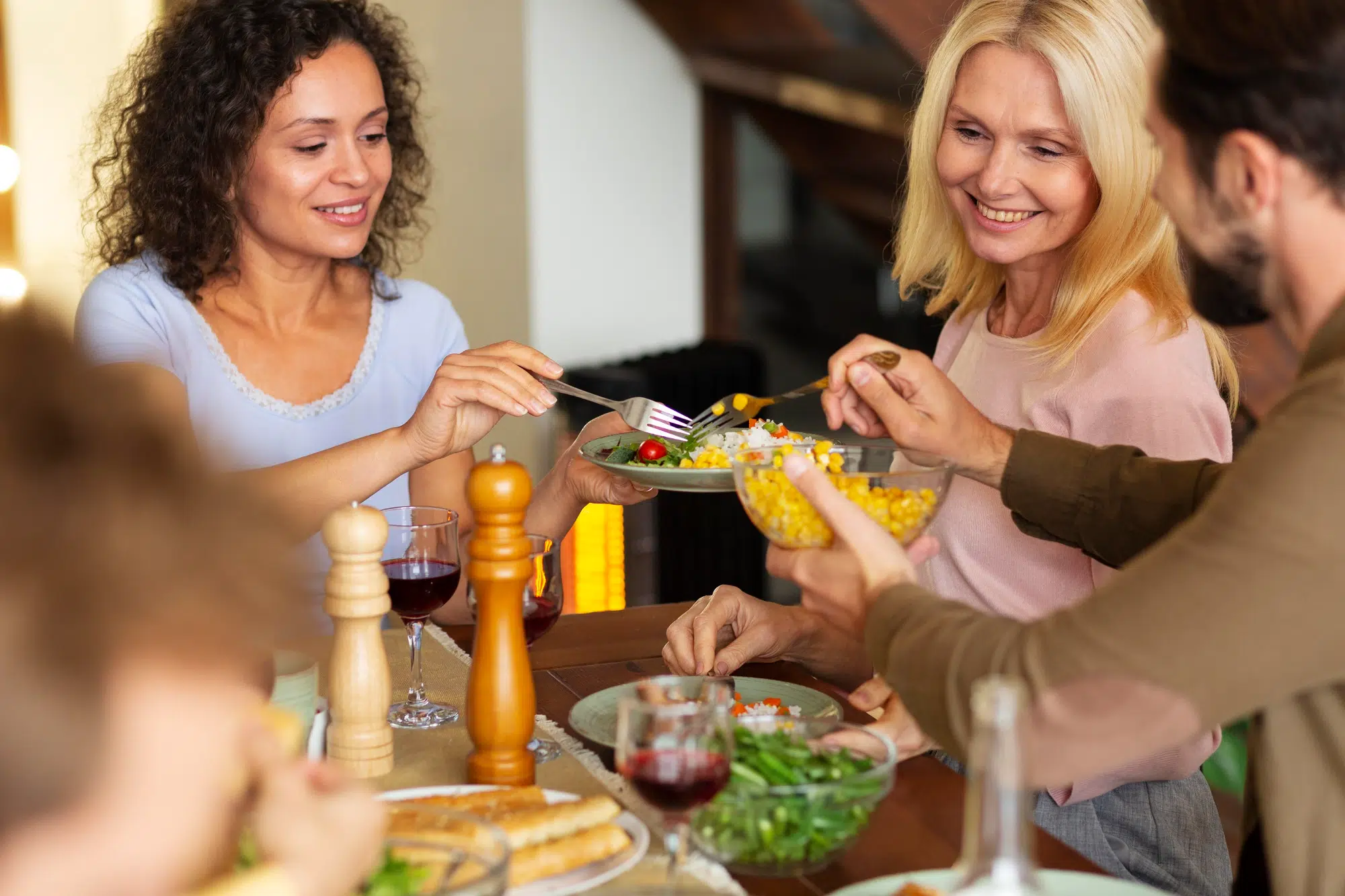
Modern meals do not need elaborate rituals to carry meaning. Two friends sharing lunch, relatives preparing an old recipe, or a host offering tea can reproduce an ancient social pattern in a simple form.
Eating together does not automatically create closeness, and every culture has different expectations around meals and hospitality. Still, the repeated presence of communal food in religion, family life, celebration, and remembrance shows how durable the practice remains.
A shared meal turns nourishment into participation. By making room at the table and sharing food with others, people express an idea that has endured across generations and cultures. The enduring message is that you have a place here.
