
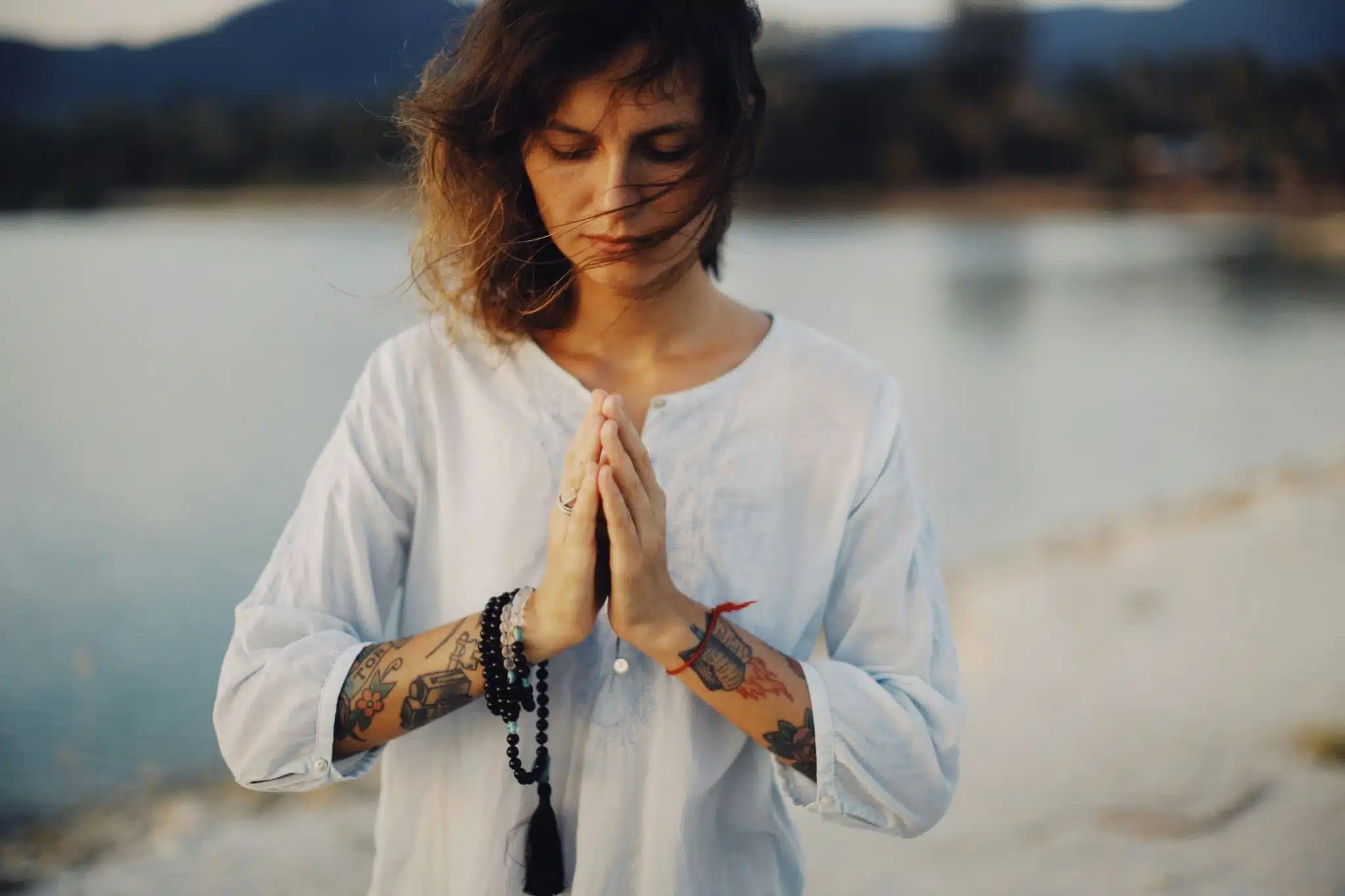
An ancient idea about feminine creative power is having a modern moment — and it is showing up not only in spirituality, but in who owns the fastest-growing creative economy on earth.
Long before “creator economy” was a phrase, the power to create was imagined as feminine. Isis, Inanna, the muse, the mother — across traditions, the generative, creative principle wore a woman’s face. To make something new was, in the old grammar of myth, a sacred and distinctly feminine act.
That idea — the divine feminine, the sacred creative energy — is resurgent as a spiritual movement. But it is also, quietly, describing something concrete. Women are now the majority of the world’s creators, earning directly from their own creative work in a way earlier generations were structurally denied. The archetype and the economics have started to rhyme.
An ancient idea about creation
The divine feminine has always been, at its core, about generativity: the capacity to bring something into being. In tradition after tradition, the goddess is the source — of life, of harvest, of art, of inspiration itself. The muse a poet invoked was female; the act of creation was framed as receiving something sacred and giving it form.
This isn’t only mythology. Research has long found creativity and spirituality closely entwined — both are sources of meaning, coping and transformation, and people frequently describe their creative practice in explicitly spiritual terms. The link the ancients dramatized as a goddess, psychologists study as a real and stable feature of how humans make meaning. The muse was a metaphor for something true.
The modern reclamation
The divine feminine’s current resurgence isn’t confined to ritual and candlelight. In its 2025 form it has a decidedly practical face: what practitioners call spiritual entrepreneurship — coaches, healers, artists and creators building soul-led, self-directed businesses aligned with their own sense of purpose rather than an employer’s.
The through-line from goddess to founder is reclamation. For most of history, the sacred feminine was worshipped in the abstract while actual women were denied the means to own what they made. The modern movement collapses that gap. It treats creative and economic sovereignty as two halves of the same thing — the right not just to create, but to keep and direct the value of your creation.
Who owns the creative economy now
Here the spiritual language meets a balance sheet. The creator economy is on track to reach roughly $480 billion by 2027, according to Goldman Sachs figures reported by Business Insider — a market that, in the words of one recent analysis, has “democratized income generation in a way no previous economic model has managed,” as Our Culture put it, now valued at more than $500 billion. A person with a phone, a niche and an authentic voice can build something real.
And women are steering it. By industry counts, they make up an estimated majority of creators worldwide and the leading voices on the largest platforms, particularly across wellness, lifestyle, education and the arts. For women, as Our Culture observed, this opened doors “that were never built in the first place.” The scale of what flows through those doors is not small: YouTube alone has paid creators, artists and media companies more than $100 billion over the past four years, CNBC reported. This is feminine creative power with a revenue line.
The one barrier left: being found
Owning your work only matters if an audience can find it, and discovery is the modern creator’s hardest problem. The internet is vast, crowded and gatekept; a genuine voice can still go entirely unheard. Being seen is no longer automatic, and for an independent creator it is the difference between making something and reaching anyone with it.
That is why creators of every kind now depend on being catalogued and searchable, on tools built to connect an audience with the specific voices it is looking for. When a creator can’t be found by wandering a platform, a directory that indexes them becomes the bridge between the work and the people who would value it. For a woman building independent creative work, being findable is the unglamorous, practical form of sovereignty — the last, quiet step between creating and being seen.
The caveats
The divine-feminine framing is a spiritual and cultural lens, not a measured cause. Women’s rise in the creator economy has many concrete drivers — smartphones, direct payment tools, shifting norms — and the archetype is a meaning-making frame laid over that change, not its engine. Read it as poetry that happens to fit the data, not as the data itself.
The economics are also far from equal. The creator economy’s rewards concentrate heavily at the very top, and the majority of creators, women included, earn modest sums. The imbalance is starkest by region: across Africa, women reportedly make up as much as 77% of monetizing influencers yet receive only a fraction of the industry’s funding. Sovereignty on paper is not the same as parity in practice, and the gap between them is the real work still ahead.
